Checking account...Please wait.
Truck Repair Shops: A 2026 Operator's Guide - Expert insights and guidance for truck operators. Learn maintenance strategies, repair options, and cost management from FRAQ Solutions.

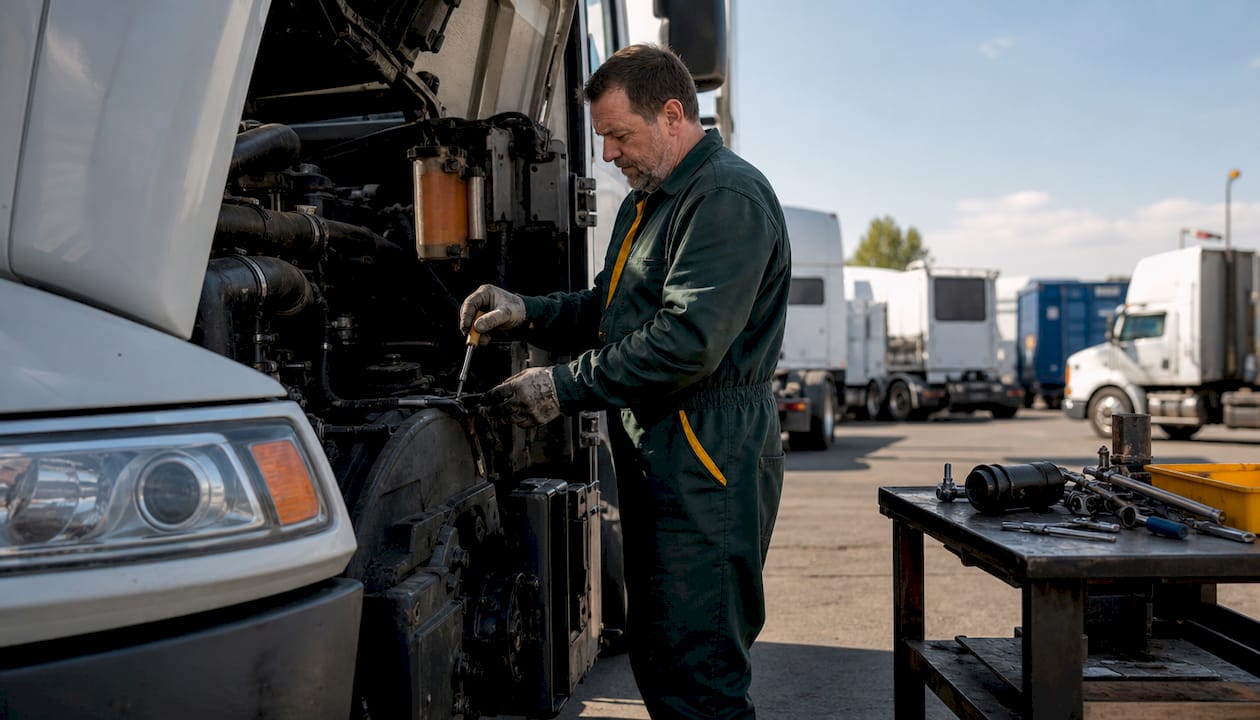
Truck repair shops are the backbone of commercial vehicle safety, providing preventive maintenance, emergency repairs, and DOT compliance inspections that keep trucks legal and moving. A well-structured PM program can reduce unplanned breakdowns by 35–50% and extend truck lifespan by over 30%. Missed maintenance tells a different story: delayed service can add an average of $8,400 in breakdown costs per incident. For operators searching for the best truck repair near me, knowing what to look for before you need it is the difference between a minor delay and a major loss of revenue.
Truck repair shops cover a wide range of services that go well beyond oil changes. Understanding the full menu helps operators plan maintenance budgets and avoid surprises.
Preventive maintenance (PM) is the foundation of any shop's service offering. PM-A services cover fluid checks, filter replacements, and basic inspections. PM-B services add brake adjustments, belt inspections, and coolant system checks. Both tiers follow mileage-based intervals tied to your truck's duty cycle.
Beyond scheduled maintenance, reputable shops handle:
Transparency is a reliable indicator of shop quality. Reputable shops provide full itemized estimates before starting any work and back their labor with a 12-month/12,000-mile parts and labor warranty. That warranty standard protects operators from repeat failures and gives you clear recourse if a repair does not hold.
Pro Tip: Always request a written itemized estimate before authorizing any repair. A shop that resists providing one is a shop worth avoiding.
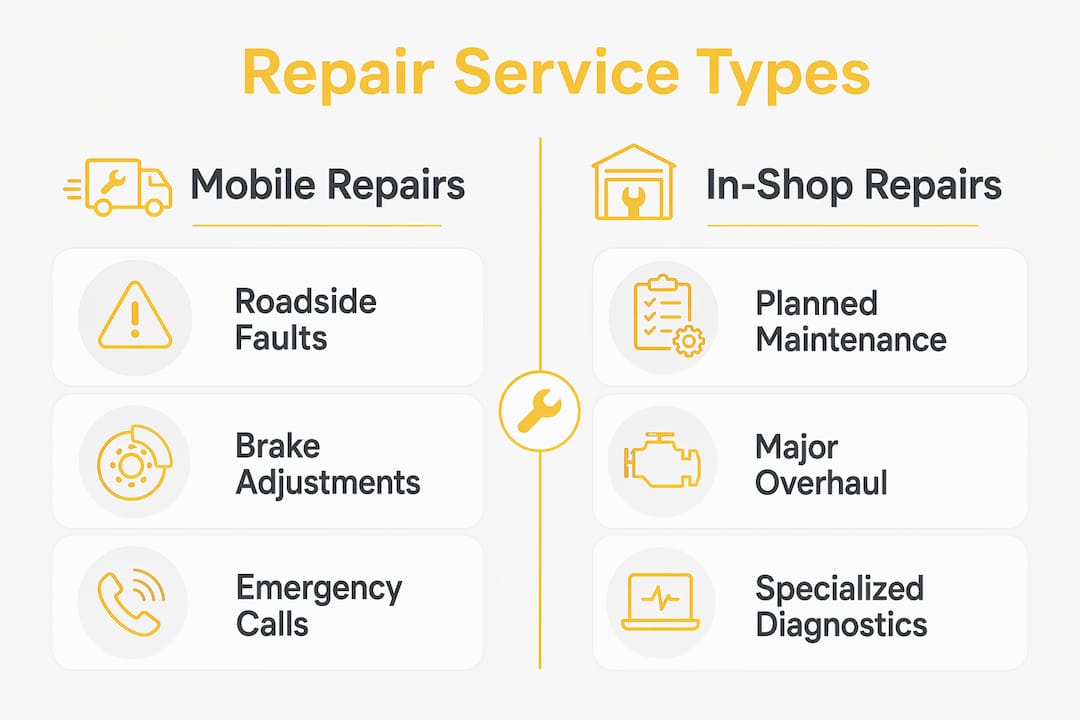
The choice between mobile and in-shop service depends on the type of repair, your location, and how much downtime you can absorb. Neither option is universally better. Each fits a specific situation.
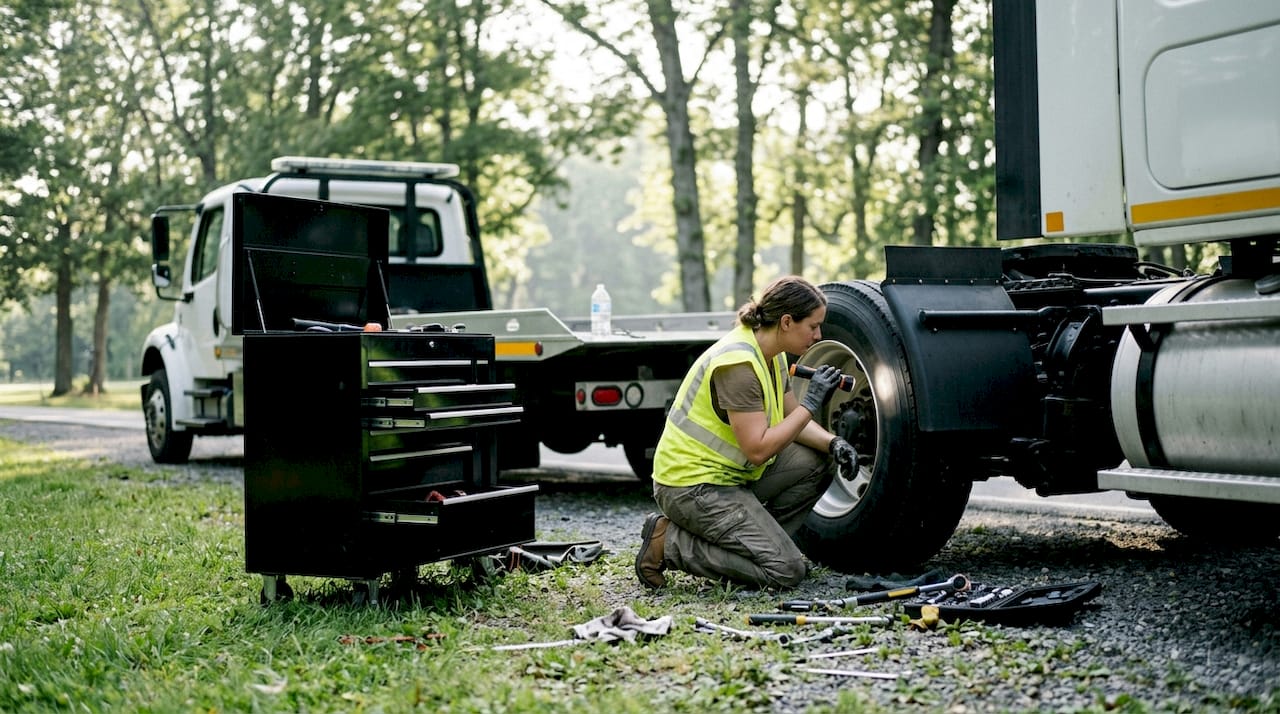
Mobile truck repair services respond to roadside emergencies typically within 1–2 hours in major service corridors. That speed matters when your truck is sitting on the shoulder of I-40 with a dead electrical system. Mobile mechanics handle brake issues, blowouts, electrical faults, and driveline problems onsite, often eliminating the need for an expensive tow.
In-shop repairs are the right call for planned maintenance, major overhauls, and diagnostics that require specialized equipment. A shop has alignment racks, engine hoists, and diagnostic computers that no mobile unit can carry. Complex work like transmission rebuilds, in-frame engine overhauls, or DPF regeneration systems needs a controlled shop environment.
Repair typeBest service modeRoadside electrical faultMobile repairBrake adjustment (minor)Mobile repairAnnual DOT inspectionIn-shopTransmission overhaulIn-shopTire blowout replacementMobile repairDPF cleaningIn-shopEngine ECM diagnosticsIn-shopNo-start (battery or fuel)Mobile repair
Cost is another factor. A mobile call-out fee is almost always less than a tow plus shop intake. But for complex work, attempting a mobile fix on a job that needs shop equipment wastes time and can create secondary damage.
Pro Tip: If your truck breaks down more than 50 miles from your nearest shop, call a mobile mechanic first. They can often get you moving or confirm whether a tow is actually necessary before you commit to that cost.
Heavy-duty truck maintenance follows a tiered schedule built around mileage intervals and federal regulations. Operators who treat these intervals as suggestions rather than requirements pay for it in violations and repair bills.
The standard PM framework works as follows:
Duty cycle matters as much as mileage. Severe duty cycles require interval reductions of 30–50% from OEM baseline recommendations. A truck hauling heavy aggregate on rough terrain every day degrades components far faster than one making light regional deliveries. Applying a one-size-fits-all schedule across different vehicle classes is one of the most common and costly mistakes fleet operators make.
Modern diagnostics extend what operators can know between service visits. Oil analysis and ECM fault code reading can push optimized maintenance intervals to 25,000–50,000 miles on qualifying equipment while catching emerging issues early. That data-driven approach reduces unnecessary service visits without increasing risk.
The consequences of skipping scheduled service are concrete. 34% of out-of-service violations at roadside inspections trace directly to maintenance failures. An out-of-service order grounds your truck immediately and triggers regulatory scrutiny that follows your record.
Pre-trip inspections, when documented thoroughly, provide early data on oil seepage, tire wear, and brake performance. That documentation gives your shop a head start on diagnosing problems before they escalate.
Choosing a heavy truck repair shop is not just about proximity. The wrong shop can cost you more in repeat repairs and downtime than a longer drive to the right one.
Evaluate shops on these criteria:
Fraqsolutions connects operators directly with verified repair providers across the United States, giving you access to shop profiles, service capabilities, and contact details without calling around blind. That direct connection removes the guesswork from vetting an unfamiliar shop in a new city.
Truck repair cost estimates follow a standard structure: parts, labor, and diagnostics. Each line item should appear separately on any estimate you receive. A shop that bundles everything into a single number makes it impossible to verify whether you are being charged fairly.
Labor rates at heavy-duty shops typically run higher than light vehicle shops. That reflects the specialized training, tooling, and liability involved in working on commercial equipment. Diagnostic fees are separate from repair costs and cover the technician's time reading ECM codes, performing pressure tests, or analyzing oil samples.
Budget planning for heavy-duty truck maintenance requires accounting for major milestones. In-frame engine rebuilds cost $15,000–$50,000 and should be anticipated based on mileage and engine condition data, not treated as a surprise. Operators who track engine hours and oil analysis results can schedule rebuilds during planned downtime rather than reacting to a catastrophic failure on the road.
The math on preventive maintenance is straightforward. Scheduled PM costs a fraction of emergency repair rates. Neglecting minor repairs causes exponential cost increases when small issues become major failures. A leaking injector seal caught during a PM-B service costs far less to fix than the injector damage it causes if left unaddressed.
Pro Tip: Build a rolling 12-month maintenance budget by tracking your PM intervals, last service dates, and mileage projections. Knowing your next PM-B is due in six weeks lets you set aside the funds rather than scrambling when the invoice arrives.
Use a diesel cost calculator alongside your maintenance budget to get a full picture of operating costs per mile. That combined view helps operators make smarter decisions about when to repair versus replace aging equipment.
A structured preventive maintenance program, combined with the right shop selection criteria, is the most reliable way to reduce truck downtime and control repair costs.
PointDetailsFollow tiered PM intervalsPM-A every 10,000–15,000 miles and PM-B every 20,000–30,000 miles reduce breakdown risk significantly.Adjust for duty cycleSevere duty operations require interval reductions of 30–50% from OEM baseline schedules.Choose mobile or shop by repair typeMobile mechanics handle roadside emergencies; in-shop service suits planned and complex repairs.Verify warranty and estimatesRequire itemized estimates and confirm a 12-month/12,000-mile warranty before authorizing work.Budget for major milestonesIn-frame rebuilds cost $15,000–$50,000 and must be planned proactively using mileage and oil analysis data.
The operators who spend the least on repairs are not the ones who find the cheapest shops. They are the ones who treat their maintenance schedule as a non-negotiable business system.
The most common mistake I see is applying a uniform PM schedule across an entire fleet without accounting for how each truck actually works. A truck doing short urban runs with constant stop-and-go braking wears its brake components at a completely different rate than a long-haul unit covering 120,000 miles a year on open highway. Treating them identically means one truck is over-serviced and another is headed for a roadside failure.
Pre-trip inspections are underused as a diagnostic tool. Drivers who document what they see, oil seepage, unusual tire wear, a slight pull in the steering, give their shop a data trail that makes diagnosis faster and more accurate. That documentation also protects operators during DOT inspections by showing a pattern of proactive attention.
On shop selection: the warranty terms a shop offers reveal more than any review. A shop confident in its technicians and parts sources stands behind a 12-month/12,000-mile guarantee without hesitation. A shop that offers 30 days is telling you exactly how much confidence it has in its own work.
Digital scheduling tools that track vehicle-specific intervals and send service reminders are no longer optional for serious operators. They are the difference between a planned shop visit and an unplanned breakdown on a Friday night 200 miles from home.
— FRAQ
Finding a reliable shop in an unfamiliar city used to mean calling around and hoping for the best. Fraqsolutions changes that by connecting truck operators directly with verified mobile diesel mechanics and heavy-duty repair shops across the United States, available 24/7 for both emergency and scheduled service.
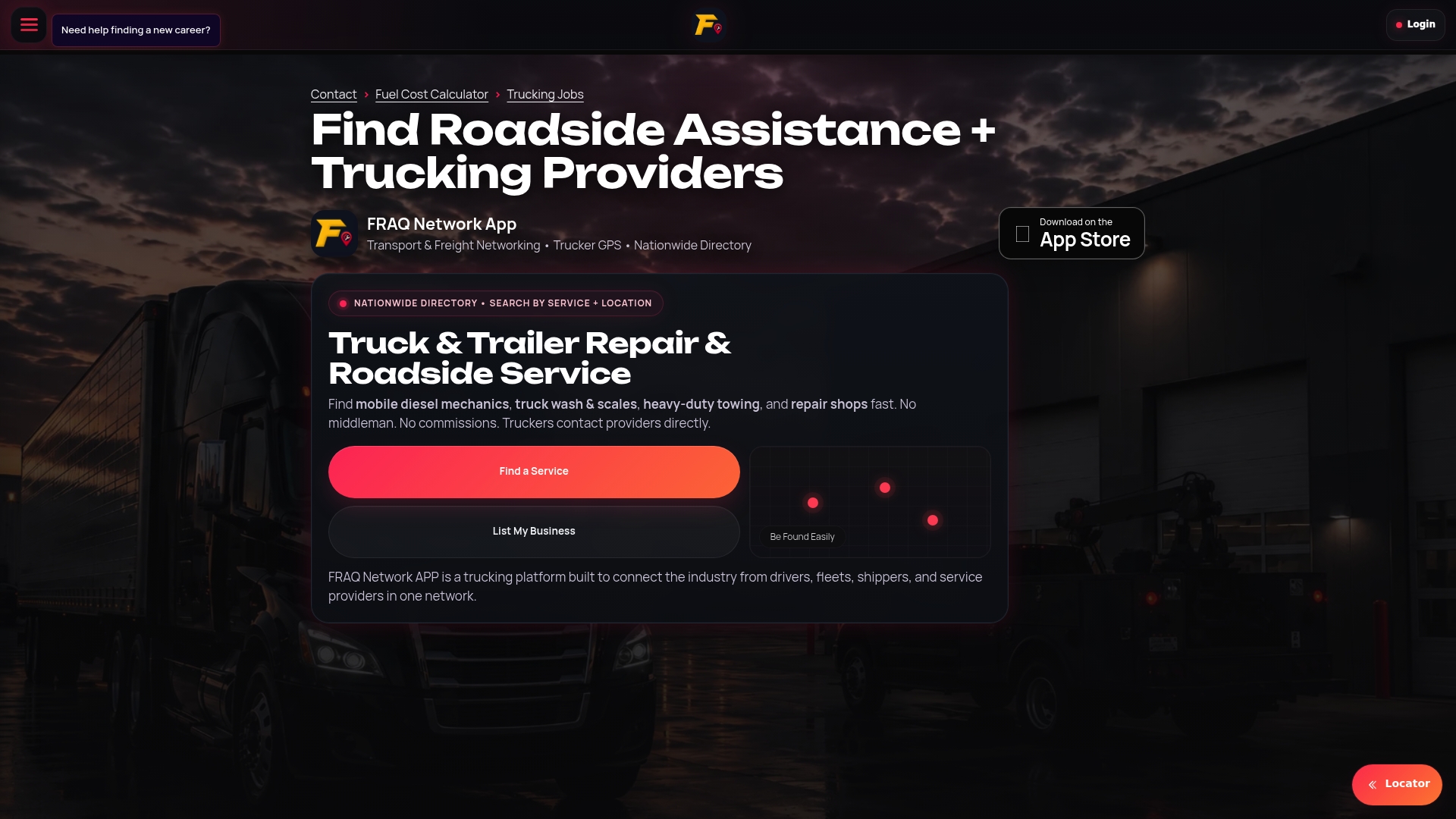
The FRAQ Network App gives operators real-time access to service provider profiles, capabilities, and contact details without middlemen or commissions. Whether you need a 24/7 emergency repair on the road or a trusted shop for your next PM-B service, Fraqsolutions puts verified providers within reach. Operators can also use the driver dashboard to track service history and upcoming maintenance intervals in one place.
PM-A service falls every 10,000–15,000 miles and PM-B every 20,000–30,000 miles, with annual DOT inspections required under 49 CFR Part 393. Severe duty cycles require shortening these intervals by 30–50%.
Mobile repair is the right choice for roadside emergencies including electrical faults, brake issues, and no-starts, with typical response times of 1–2 hours in major corridors. In-shop service suits planned maintenance, major overhauls, and diagnostics requiring specialized equipment.
The industry standard is a 12-month/12,000-mile parts and labor warranty. Any shop offering significantly less coverage warrants closer scrutiny before you authorize work.
In-frame engine rebuilds cost $15,000–$50,000 and should be planned based on mileage tracking and oil analysis data rather than addressed reactively after a failure.
Use a verified industry directory like Fraqsolutions to access shop profiles with service capabilities and contact details. Confirm the shop has experience with your specific truck class, offers itemized estimates, and backs its work with a standard warranty.