Checking account...Please wait.
Road Service App for Commercial Trucks: 2026 Guide - Expert insights and guidance for truck operators. Learn maintenance strategies, repair options, and cost management from FRAQ Solutions.

A road service app is a GPS-enabled platform that connects commercial truck drivers and fleet operators with licensed mobile technicians for on-site roadside assistance, without annual membership fees or middlemen. The industry term for this category is "mobile roadside assistance dispatch," and the best platforms in this space combine real-time GPS tracking, transparent per-incident pricing, and mobile mechanics equipped for heavy-duty vehicles. Emergency roadside assistance response times typically run 30–60 minutes depending on location and service complexity. For a fleet operator watching a loaded semi sit idle on I-40, that window is the difference between an on-time delivery and a costly delay. Fraqsolutions connects drivers directly to verified service providers across the United States, covering everything from mobile diesel mechanics to towing and reefer repair.
The best vehicle assistance apps for commercial fleets do far more than call a tow truck. They dispatch mobile mechanics who arrive with shop-level equipment, confirm the technician's live location, and process payment transparently after the job is done.
Effective mobile roadside help platforms share a consistent set of capabilities that matter specifically to heavy vehicle operators:
Pro Tip: Before a trip, verify that your chosen platform explicitly lists semi-truck, trailer, and heavy-duty diesel support. A platform that covers passenger vehicles only will leave you stranded when you need it most.

Preparation before a breakdown happens is what separates a 35-minute fix from a three-hour ordeal. Drivers who set up their accounts and permissions in advance get faster service every time.
The following setup steps apply to any car breakdown service app used by commercial operators:
Drivers operating in rural corridors like US-50 in Nevada or US-2 in Montana should carry a printed list of regional diesel repair contacts as a secondary option. No app covers every mile of every route.
When a breakdown happens, a clear process gets help on the way faster than improvising. The steps below apply to most mobile roadside dispatch platforms.
The table below shows common service types and typical use cases for commercial operators:
Service typeCommon use caseFlat tire assistanceBlowout on a loaded semi or trailer axleBattery jump serviceDead battery after extended idle or cold startMobile diesel repairEngine fault codes, fuel system issues, DEF problemsTowingNon-drivable rig requiring shop-level repairFuel deliveryRunning out of diesel on a remote stretch
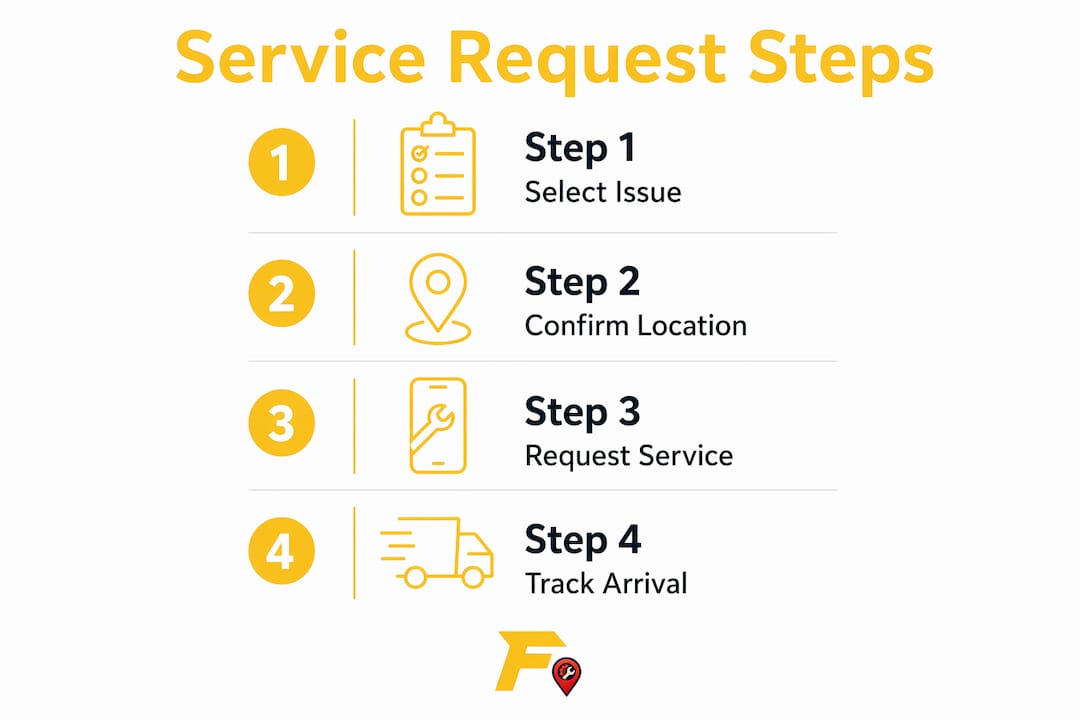
Even the best platforms run into real-world friction. Knowing what to expect keeps drivers from losing more time than necessary.
Pro Tip: Fleet managers handling multiple simultaneous breakdown requests should assign one point of contact per driver and use the platform's fleet dashboard to track all active service requests from a single screen. Fraqsolutions' driver and fleet dashboard is built specifically for this workflow.
The most effective road service app for commercial fleets combines real-time GPS dispatch, mobile shop-level equipment, transparent per-incident pricing, and 24/7 availability to minimize truck downtime on any route.
PointDetailsVerify heavy-vehicle supportConfirm the platform covers semi-trucks and trailers before your first trip.Set up accounts before breakdownsPre-load vehicle details and payment to speed up dispatch when it counts.Use real-time tracking activelyMonitor technician location and send vehicle specifics through the app immediately.Choose pay-per-use pricingPer-incident models give fleet operators direct cost control without subscription overhead.Prepare rural backup plansIdentify regional diesel contacts for routes where app coverage is thin.
The trucking industry has relied on membership-based roadside programs for decades, and most fleet managers treat them as a fixed operating cost. That assumption deserves a hard look.
Pay-per-service models work better for fleets with lower breakdown frequency. A fleet running 20 trucks that averages two roadside incidents per month pays only for those two events, not for 20 memberships that sit unused. Fleet operators benefit from pay-per-service models because they reduce recurring costs and tie expenses directly to actual usage.
The second issue most operators overlook is equipment fit. A standard roadside membership dispatches whatever technician is closest, regardless of whether that technician carries a commercial-grade tire machine or has experience with a 13-speed transmission. Specialized roadside assistance for heavy trucks requires mobile mechanics equipped beyond typical tow trucks, handling repairs on-site to avoid costly shop downtime. Selecting a platform that verifies provider capabilities for heavy rigs is not optional. It is the baseline requirement.
Real-time tracking also changes the driver experience in a way that membership hotlines cannot match. A driver who can see the technician moving toward them on a map stays calmer, communicates better with their dispatcher, and makes smarter decisions about cargo security. Digital real-time updates transform roadside assistance into a transparent and less stressful experience. That is not a small benefit when a driver is sitting on the shoulder of I-10 at 2:00 AM.
The future of mobile roadside service will move toward predictive dispatch, where telematics data flags a failing component before the truck stops. Platforms that already integrate GPS and service history are best positioned to add that layer. Fraqsolutions is built on exactly that foundation.
— FRAQ
Commercial truck operators need more than a generic app when a rig goes down. Fraqsolutions provides a direct connection to verified mobile diesel mechanics, semi-truck repair specialists, and towing providers across the United States, with no commissions or middlemen between the driver and the technician.
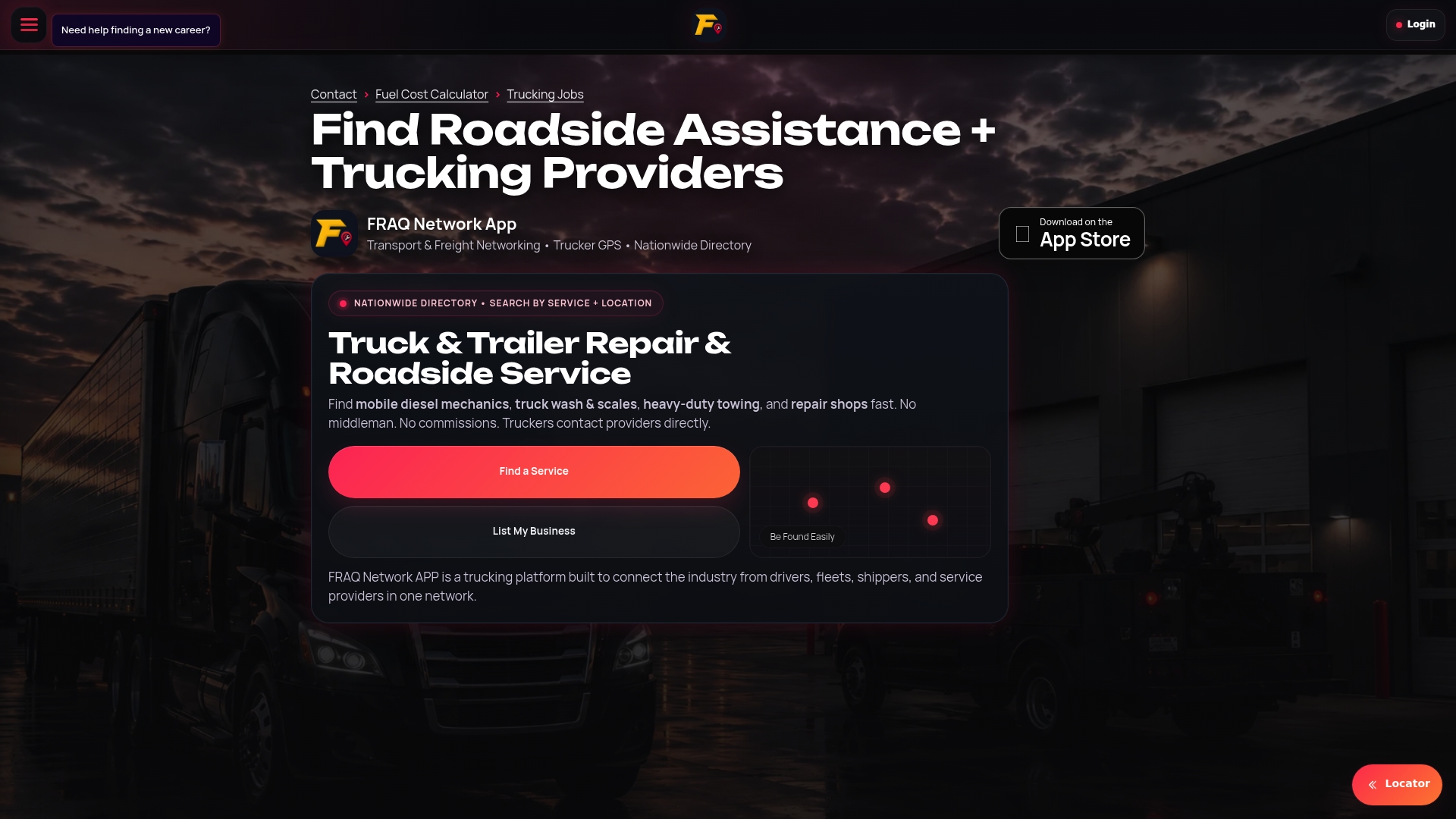
The FRAQ Network App gives drivers real-time access to nearby service providers, GPS-based dispatch, and transparent pricing on every request. Fleet managers can monitor active service requests and coordinate multiple drivers from a single dashboard. For 24/7 semi-truck repair and mobile diesel mechanic services, Fraqsolutions' Memphis rescue repair services and San Antonio truck repair providers are available around the clock. Connect with the right technician before the next breakdown happens.
A road service app is a GPS-enabled mobile platform that connects commercial truck drivers with licensed mobile technicians for on-site roadside assistance. It covers services like flat tire repair, battery jumps, diesel repair, and towing without requiring an annual membership.
Emergency roadside service response times typically range from 30 to 60 minutes, depending on location and the complexity of the service needed. Rural routes with thin provider networks may see longer wait times.
Pay-per-service pricing is more cost-effective for fleets with lower breakdown frequency because operators pay only for actual incidents. Fleets with high incident rates should compare per-event costs against annual membership pricing before deciding.
Not all platforms carry the equipment or expertise for heavy-duty vehicles. Drivers should confirm that the provider explicitly lists semi-truck, trailer, and heavy-duty diesel support before relying on any vehicle assistance app for commercial operations.
Screenshot the service confirmation and technician contact number immediately after booking. If the connection drops, call the technician directly using the saved number and provide your exact location verbally to keep the dispatch on track.